
Adaptation
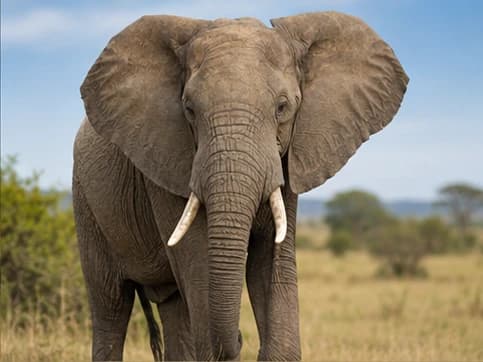
An elephant's trunk has many uses.
The trunk is a muscular combination of the nose and upper lip. Elephants use it to breathe, smell, touch, grasp, drink, and produce sounds.
Elephants are the largest living land animals, instantly recognized by their trunks. These intelligent herbivores live in matriarchal herds and have the longest known pregnancy of any mammal.
Scientific name
Loxodonta africana, Loxodonta cyclotis, Elephas maximus
Animal group
Mammal
Diet
Herbivore
Social structure
Matriarchal herds
Range
Africa and Asia
Gestation
About 22 months, the longest of any land mammal
Key facts
Adaptation
The trunk is a muscular combination of the nose and upper lip. Elephants use it to breathe, smell, touch, grasp, drink, and produce sounds.
Record
The African savanna elephant, African forest elephant, and Asian elephant are distinct species, each adapted to different habitats.
Reproduction
San Diego Zoo notes this is the longest pregnancy of any land mammal. A newborn calf can weigh 100 kilograms or more.
Behavior
The matriarch, often the oldest female, guides the herd to food and water sources. Her experience can be critical for the group's survival.
Behavior
Elephants cooperate, show grief, recognize themselves in mirrors, and can learn tasks. They also communicate with low-frequency rumbles that travel long distances.
Conservation
San Diego Zoo reports that Asian and African savanna elephants are Endangered, while African forest elephants are Critically Endangered on the IUCN Red List.
Elephants are large, intelligent herbivorous mammals. Their trunks are used for many daily tasks, and calves spend years learning how to use them well.
The term elephant includes African and Asian species, whose needs and conservation status can differ.
Elephant calves are protected while they develop coordination, communication, and their place in a herd.
Social relationships between mothers, calves, and other herd members are an important part of elephant life.
Elephant conservation involves protecting habitat, reducing poaching, and supporting coexistence between people and elephants.
Long-term monitoring of movement, behavior, and health helps guide conservation decisions.
Elephants need large, connected landscapes where they can find food, water, and safe routes through seasonal habitats.
GPS movement studies help conservationists understand how elephant travel patterns relate to changing landscapes and human activity.
Keep exploring
Move from reading facts to picking a fresh species, building a sketch ticket, or browsing a themed generator.
Elephants use trunks for many tasks, and calves take time to develop full control over them.
Poaching, habitat loss and fragmentation, and conflict with people are major threats.
No. Conservation status differs among elephant species; African forest elephants face the highest listed risk in this source.