001
Lions are the most social big cats.
Most cat species are solitary, but lions routinely form prides made of related females, their cubs, and a few adult males. This social system supports group hunting, shared cub protection, and territory defense.
002
A lion pride is usually built around related females.
Female lions in a pride are often mothers, sisters, cousins, and daughters. Older females may remain together for life, while adult males typically move between prides over time.
003
A male lion's mane is a visual signal as well as protection.
The mane can make a male look larger to rivals and more noticeable to females. It may also help protect the neck during fights over territory or breeding access.
004
Lions can rest for most of the day.
Lions often alternate short periods of activity with long resting bouts. San Diego Zoo notes that lions may spend up to 21 hours in a day lying down, sleeping, or resting.
005
Lionesses often cooperate when hunting.
During group hunts, smaller and faster females may chase prey while heavier females ambush or capture it. The roles can change depending on the prey and which females are hunting.
006
Lions use roaring as part of territory communication.
Roaring helps lions announce their presence and coordinate with other pride members. Scent marking, rubbing, and ground scraping also help define territory.
007
Lions now occupy only a small part of their historic range.
In 2025, the lion's current wild range was estimated at just over 6 percent of its historical range. Their remaining populations are often fragmented and isolated.
008
Lions rely on short bursts of speed, not long chases.
A lion can sprint fast for short distances, but it is not built for long pursuit. Successful hunts depend on cover, timing, cooperation, and getting close enough before the final rush.
009
Lion cubs can have spots that fade as they grow.
Young lions may show spotting on their coats. These markings usually become less obvious with age as the adult tawny coat develops.
010
Wild Asiatic lions survive in one isolated Indian population.
Wild Asiatic lions are now restricted to India, where they survive in and around the Gir Forest National Park and Wildlife Sanctuary.
011
Male lions do more than display a mane.
Adult males often patrol, scent mark, and defend the pride's territory. They may hunt less often than females, but territory defense can be crucial for cub survival and pride stability.
012
A common octopus can rapidly change its skin color and texture.
Pigment cells and specialized muscles let the animal blend with rocks, sand, algae, or reef surfaces. This camouflage helps it avoid predators and approach prey without being noticed.
013
Its beak is the main hard part of its body.
The common octopus has no internal shell or rigid skeleton. Its hard beak sits where the arms meet, which is why the animal can squeeze through openings larger than the beak.
014
Octopus ink can hide an escape and confuse predators.
When threatened, a common octopus can release dark ink that clouds the water. The ink can also make it harder for some predators to track the octopus by smell.
015
The common octopus has three hearts.
Two hearts help move blood through the gills, while the third pumps blood to the rest of the body. This setup supports an active animal with a demanding marine lifestyle.
016
A common octopus can regrow a lost arm.
If a predator grabs an arm, the octopus may escape and later regenerate the lost limb. Regrowth is one reason arm loss does not have to be fatal.
017
The common octopus is considered one of the most intelligent invertebrates.
Its flexible behavior includes hiding, exploring, learning, manipulating objects, and using different escape tactics. That intelligence helps a soft-bodied animal survive in predator-rich habitats.
018
A common octopus usually lives only a short time.
A common octopus usually lives about one to three years. That short life is paired with fast growth and high reproductive output.
019
Female common octopuses can lay huge numbers of eggs.
Females can lay between 100,000 and 500,000 eggs. The female guards the eggs, and only a small fraction of hatchlings survive to adulthood.
020
Large common octopuses can reach about 1.3 meters in total length.
Common octopuses vary in size, and many are smaller, but larger adults can reach roughly 1.3 meters. The arms make up much of that total length.
021
A common octopus can jet away by pushing water from its mantle.
Jet propulsion gives the animal a fast escape option when camouflage or hiding is not enough. It can also crawl across the seafloor when speed is less important.
022
Common octopuses often hunt crustaceans and mollusks.
Crabs, crayfish, shrimp, clams, and other shell-bearing prey are common targets. The octopus uses arms, suckers, beak, and venomous saliva to handle difficult prey.
023
The emperor penguin is the largest living penguin species.
Adults stand about 110 to 130 centimeters tall and can weigh up to about 40 kilograms at the start of the breeding season, making them larger than other living penguins.
024
Emperor penguins breed during the Antarctic winter.
They are famous for breeding in some of the harshest weather on Earth. This unusual timing requires strong cold adaptations and coordinated parental care.
025
Male emperor penguins incubate the egg on their feet.
After the female lays a single egg, the male balances it on his feet beneath a brood pouch and fasts while keeping the egg warm through winter.
026
Emperor penguins can dive hundreds of meters deep.
Most foraging dives are far shallower than the record, but emperor penguins often dive between about 150 and 250 meters, and the deepest recorded dive reached 565 meters.
027
The longest recorded emperor penguin dive was 22 minutes.
Most dives are much shorter, often a few minutes, but this record shows how well adapted emperor penguins are for underwater foraging.
028
Emperor penguins huddle to stay warm.
Huddling reduces heat loss in extreme cold. Birds rotate through the huddle so individuals are not stuck on the cold outer edge all the time.
029
Their blood vessels help recycle body heat.
Arteries and veins lie close together so blood going to the feet, wings, and bill is cooled, while returning blood is warmed before it reaches the body core.
030
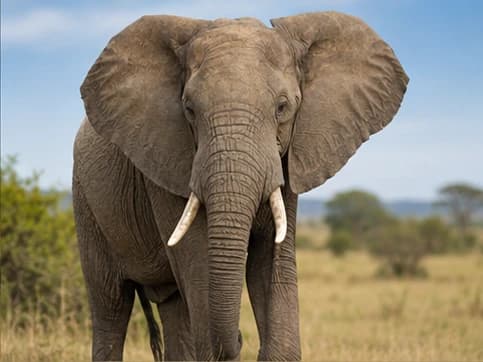
Many emperor penguin colonies form on fast ice.
Fast ice is sea ice attached to land, islands, or grounded icebergs. Stable breeding ice matters because egg incubation and chick rearing take time.
031
Emperor penguins mostly eat fish, but also take squid and krill.
Their diet changes with season and food availability. Fish are often important, with squid and krill adding variety in the Southern Ocean food web.
032
Emperor penguins are not strongly territorial during breeding.
Their survival depends on huddling, so defending spaced-out territories would work against one of their most important cold-weather behaviors.
033
Emperor penguins are now listed as Endangered.
Emperor penguins are listed as Endangered because climate change is reducing the stable sea ice they need for breeding, chick survival, feeding, and moulting.
034
A wolf pack is essentially a family group.
A typical pack includes a breeding pair, their pups, and often older offspring from previous years. The pack works together to hunt, raise pups, and defend territory.
035
Wolves howl to communicate over long distances.
Howling helps pack members stay in touch, reassemble after separation, and warn other packs to stay away. Individual wolves can be recognized by the pitch and tone of their howl.
036
A wolf pack's territory can cover hundreds of square kilometers.
Territory size depends on prey availability: packs in areas with fewer prey need larger territories. Wolves patrol and scent-mark boundaries regularly.
037
Wolves have extremely strong jaws and large canine teeth.
Their powerful bite helps them bring down large prey such as deer, elk, and moose. Strong jaw muscles and specialized teeth allow wolves to crush bone and consume most of a carcass.
038
Gray wolves can vary widely in coat color.
Despite the name, gray wolves may be pure white, black, brown, reddish, or any mix of these colors, depending on geography and individual genetics.
039
Wolves can travel long distances at a steady trot.
Their lean build, strong legs, and efficient gait let them cover 50 kilometers or more in a day while searching for prey or patrolling territory.
040
Raccoons have a distinctive black mask and ringed tail.
The dark fur around the eyes reduces glare and may help with night vision. The 4 to 10 alternating dark and light rings on the tail are a reliable field mark for identification.
041
Raccoon front paws are extremely sensitive and dexterous.
Their forepaws have many sensory receptors, almost like a second set of eyes. Raccoons frequently manipulate objects, open containers, and explore their environment by touch.
042
Raccoons are opportunistic omnivores with a highly varied diet.
They eat fruits, nuts, insects, crayfish, frogs, eggs, small mammals, birdseed, and human food scraps. This flexible diet is a key reason for their success in diverse habitats.
043
Raccoons thrive in urban and suburban environments.
They den in attics, chimneys, and sheds, and forage in gardens, trash cans, and compost piles. Their intelligence and dexterity let them open latches, lids, and simple locks.
044
Raccoons often manipulate food in water, giving them their name.
The species name lotor means 'washer' in Latin. When near water, raccoons may dunk and rub food items, possibly to moisten them or remove unwanted parts.
045
Raccoons are considered highly intelligent animals.
Studies show raccoons can solve complex problems, remember solutions for years, and learn from observing others. Their cognitive abilities rival those of some primates.
046
Beavers are ecosystem engineers that build dams and lodges.
By damming streams, beavers create ponds that slow water flow, reduce erosion, and provide habitat for fish, amphibians, insects, and waterfowl. These wetlands can persist long after the beavers leave.
047
A beaver's flat tail has multiple functions.
The broad, scaly tail serves as a rudder while swimming, a prop for balance when sitting upright, a store of fat, and a warning signal when slapped against the water's surface.
048
Beaver teeth never stop growing.
Like all rodents, beavers have incisors that grow continuously throughout life. Chewing on wood keeps the teeth worn to a sharp chisel edge, ideal for felling trees.
049
Beavers can stay underwater for up to 15 minutes.
Special nostrils and ears that close underwater, a third transparent eyelid, and efficient oxygen storage allow beavers to work on their dams and lodges underwater for extended periods.
050
Beavers live in family colonies.
A colony usually consists of an adult breeding pair, their kits from the current year, and yearlings from the previous year. Young beavers typically disperse at age two to find their own territory.
051
Beavers use scent mounds to mark territory.
Beavers build small mounds of mud and vegetation and cover them with castoreum, a pungent oil produced in their castor sacs. These scent marks communicate the colony's presence to other beavers.
052
Moose are the largest living deer species.
Adult male moose can stand over 2 meters tall at the shoulder and weigh up to 700 kilograms. Their massive size sets them apart from all other deer species.
053
Male moose grow broad, palmate antlers each year.
Unlike the branching antlers of most deer, moose antlers are shovel-shaped with multiple points along the outer edge. A bull's antlers can span over 1.5 meters and are shed each winter.
054
Moose are powerful swimmers.
Their long legs and hollow guard hairs make them strong swimmers. Moose can paddle at speeds up to 10 kilometers per hour and will readily cross lakes and rivers to reach feeding areas or escape predators.
055
Long legs help moose move through deep snow.
With legs over a meter long, moose can wade through snow that would stop most other hoofed mammals. This helps them access winter browse that other deer cannot reach.
056
Moose feed on aquatic plants in summer.
Moose wade into ponds and lakes to eat water lilies, pondweed, and other submerged vegetation. Aquatic plants provide valuable sodium and other minerals.
057
Moose are mostly solitary animals.
Unlike many deer that form herds, moose typically live alone. The main social bond is between a cow and her calves. Bulls associate with cows only during the autumn breeding season.
058
Bison have a prominent shoulder hump made of powerful muscles.
The hump is supported by long vertebrae and consists of strong muscles that help bison use their heads to clear snow from grass in winter. This adaptation is essential for winter survival on the plains.
059
A bison's thick coat protects it through harsh winters.
Bison have a dense woolly undercoat for insulation and a coarser outer coat. In winter, the fur grows thicker, and bison can withstand blizzards by facing into the wind.
060
Bison roll in dust wallows to maintain their coats.
Wallowing helps bison shed loose fur, deter biting insects, and cool off. The shallow depressions they create can persist in the landscape for years and provide microhabitats for other species.
061
Bison can run faster than a horse over short distances.
Despite weighing up to 900 kilograms, bison can sprint at speeds over 55 kilometers per hour. They are also agile and can turn quickly, making them surprisingly athletic for their size.
062
Bison live in herds that once numbered in the millions.
Before the 1800s, an estimated 30 to 60 million bison roamed North America. Their seasonal movements shaped the Great Plains ecosystem, and herds still migrate today in protected areas.
063
The American bison is a major conservation success story.
By 1889, fewer than 1,100 American bison remained after systematic slaughter. Through the efforts of ranchers, conservationists, and government programs, the population has recovered to about 500,000, mostly in commercial herds.
064
Every tiger has a unique stripe pattern.
Researchers can use the pattern of dark stripes on a tiger's coat to recognize individual animals, much as people use distinctive physical features to tell individuals apart.
065
Tigers are stalk-and-ambush hunters.
A tiger moves slowly and quietly, using cover to get close before making a short final rush. This method is more effective than trying to chase prey over a long distance.
066
Tiger stripes help break up the cat's outline.
In long grass and wooded habitats, the contrast of the coat can make a waiting tiger harder for prey to recognize as a single large animal.
067
Tigers are strong swimmers.
Unlike many cats, tigers readily enter water. They may rest near ponds, streams, and rivers, and their partially webbed toes help when they swim.
068
A tiger's night vision is much stronger than a human's.
San Diego Zoo notes that tiger night vision is about six times better than ours, which helps when these predators are active in low light.
069
Six tiger subspecies survive today.
The surviving subspecies occupy different Asian habitats, from tropical forests and mangroves to arid forests and northern taiga.
070
Giraffes are the tallest land animals.
Their necks and legs can each be about 1.8 meters long, allowing giraffes to browse high above many other herbivores.
071
Giraffes have seven neck vertebrae, like people do.
The difference is size: each giraffe neck vertebra can be more than 25 centimeters long.
072
Both male and female giraffes have ossicones.
Ossicones are the hair-covered structures on a giraffe's head. Males can use them during sparring contests.
073
Each giraffe has an individual coat pattern.
Coat colors and markings vary by species and individual. The patterns can help people distinguish one giraffe from another.
074
Giraffes can defend themselves with powerful kicks.
When threatened, giraffes can kick with great force. Their height, speed, and group living also help them avoid danger.
075
Many specialists recognize four giraffe species.
A major specialist-group assessment recognized northern, reticulated, Masai, and southern giraffes as distinct species.
076
Cheetahs are the fastest land mammals.
They are adapted for intense, short bursts of speed rather than long-distance running, which helps them catch agile prey.
077
A cheetah's tail helps it steer.
The long tail acts like a rudder, helping the cat keep its direction while it turns at speed after fleeing prey.
078
Cheetahs have black facial tear marks.
The dark lines running from the eyes toward the mouth are called malar stripes and are a familiar field mark of the species.
079
Related male cheetahs may live in coalitions.
Females usually live independently except when raising young, while related males, often brothers, can form small groups called coalitions.
080
Cheetahs cannot roar like lions and tigers.
They communicate with sounds including chirps, purrs, growls, hisses, and bleats instead of the roar used by some other big cats.
081
Cheetahs try to start their sprint close to prey.
A cheetah often stalks to within about 50 meters before charging, because even its remarkable speed can only be maintained for a short distance.
082
Koalas are marsupials, not bears.
Despite the nickname 'koala bear,' koalas belong to the group of pouched mammals that includes kangaroos, wombats, and possums.
083
Koalas can sleep for as much as 20 hours a day.
Eucalyptus leaves provide relatively little energy, so a koala conserves energy by resting for long periods and moving only when needed.
084
Koalas specialize in eating eucalyptus leaves.
They can tolerate certain eucalyptus compounds that many herbivores cannot, and they select preferred tree varieties from the hundreds of eucalyptus species.
085
Koala hands have two opposing thumbs.
Two opposable digits and sharp claws help koalas grip branches securely as they climb and rest high in trees.
086
A koala's pouch opens toward its hind legs.
Like its close wombat relatives, a koala has a rear-facing pouch. A newborn joey climbs into it and attaches to a teat while it develops.
087
Koalas are most active at night.
They spend daytime resting and become more active after dark, when they forage and move among eucalyptus trees.
088
An elephant's trunk has many uses.
The trunk is a muscular combination of the nose and upper lip. Elephants use it to breathe, smell, touch, grasp, drink, and produce sounds.
089
Three elephant species are recognized today.
The African savanna elephant, African forest elephant, and Asian elephant are distinct species, each adapted to different habitats.
090
Elephant gestation lasts about 22 months.
San Diego Zoo notes this is the longest pregnancy of any land mammal. A newborn calf can weigh 100 kilograms or more.
091
Elephant herds are led by an older female.
The matriarch, often the oldest female, guides the herd to food and water sources. Her experience can be critical for the group's survival.
092
Elephants show signs of complex intelligence.
Elephants cooperate, show grief, recognize themselves in mirrors, and can learn tasks. They also communicate with low-frequency rumbles that travel long distances.
093
Elephant conservation status differs among species.
San Diego Zoo reports that Asian and African savanna elephants are Endangered, while African forest elephants are Critically Endangered on the IUCN Red List.
094
Every zebra has a unique stripe pattern.
Individual stripe patterns help researchers recognize zebras, and young foals learn their mother's pattern.
095
There are three zebra species.
The plains, mountain, and Grevy's zebras differ in size, stripe patterns, habitats, and social systems.
096
Zebras can defend themselves with powerful kicks.
A zebra's kick can seriously injure predators; hearing, vision, speed, and herd vigilance add further protection.
097
Zebra foals can walk soon after birth.
Foals can walk within about 20 minutes and run after about an hour, helping them keep up as the herd moves.
098
Zebras can keep watch while others rest.
When zebras rest at night, one may stand watch to reduce the chance of a surprise ambush.
099
Grevy's zebras face especially serious conservation pressure.
Habitat loss, poaching, and disease affect zebras, and the source describes the Grevy's zebra as Endangered.
100
The macropod family name means 'big feet.'
Kangaroos and their relatives have especially large, powerful hind legs and feet compared with their forelimbs.
101
Large kangaroos can cover more than 7 meters in one hop.
Their specialized hopping movement uses both feet together, and a long muscular tail helps with balance and turning.
102
Hopping can become more energy-efficient as kangaroos speed up.
Up to cruising speed, their legs, tail muscles, and tendons help them travel with remarkable efficiency.
103
A joey continues developing in its mother's pouch.
A tiny, underdeveloped newborn attaches to a nipple in the pouch and nurses for months before venturing out.
104
Kangaroos can thump the ground to warn others.
When a kangaroo senses danger, it can alert nearby animals by loudly thumping its feet on the ground.
105
Macropods can rechew food like cud.
Their chambered stomach lets them bring recently swallowed vegetation back up, chew it again, and then swallow it for final digestion.
106
Giant pandas are bears.
Genetic studies confirm their relationship with bears, alongside similarities in anatomy, movement, social system, and reproduction.
107
About 99% of a giant panda's diet is bamboo.
Pandas spend at least 12 hours a day eating bamboo, although they can also eat other plant and animal foods occasionally.
108
A panda uses a pseudo-thumb to hold bamboo.
An enlarged wrist bone works with the five digits to grasp and manipulate bamboo stalks.
109
A newborn panda is tiny compared with its mother.
Newborn cubs weigh only about 85 to 142 grams and are highly dependent on their mothers.
110
Pandas leave scent marks to communicate.
Both males and females use scent glands to mark trees, rocks, bamboo, and bushes; these marks carry information for other pandas.
111
Adult giant pandas are mostly solitary.
Adults usually keep their own space, with brief exceptions for mating and mothers caring for cubs.
112
The scientific name Ursus maritimus means 'sea bear.'
Polar bears are adapted swimmers and live throughout the Arctic where sea ice helps them hunt seals.
113
Ringed seals are a polar bear's main prey.
Polar bears wait at breathing holes and cracks in sea ice, relying on seals for the high-energy diet they need.
114
Most polar bears do not hibernate.
Except for pregnant females in dens, polar bears continue hunting through winter when conditions allow.
115
Polar bears can detect seals from long distances.
Their strong sense of smell can locate seals on the ice and help find breathing holes under snow.
116
Polar bears can swim more than 100 kilometers without rest.
Their broad front feet paddle while their hind legs help steer, allowing long swims in search of food or ice.
117
Pregnant polar bears give birth in snow dens.
A pregnant female uses a maternity den during pregnancy and the first months of a cub's life, relying on stored body fat.