
Real birds · Unusual adaptations
10 of the Weirdest Birds in the World (With Pictures)
From the helmet-headed cassowary to the giant-billed toucan, meet birds with extraordinary looks and behaviors. Discover how their beaks, colors, calls and ways of raising young help them thrive.
Updated November 20, 2026 · Bird facts and photos
What Are the Weirdest Birds in the World?
Some of the world's most unusual birds are the southern cassowary, toco toucan, great hornbill, emperor penguin and laughing kookaburra. Each stands out for a different reason—from striking head shapes and specialized bills to remarkable parenting, unusual calls or life without flight. They are all real bird species.
There's no single answer to which bird is the strangest. We chose these ten for the unusual ways they look, move, communicate and raise their young.
10 Strange Birds at a Glance
Pick a bird to jump to its photo, habitat and surprising fact.
| Bird | What makes it unusual? | Region |
|---|---|---|
| 1. Southern Cassowary | Helmet-like head and vivid blue neck | Oceania |
| 2. Toco Toucan | Oversized orange-yellow bill | South America |
| 3. Great Hornbill | Yellow-and-black bill with casque | Asia |
| 4. Emperor Penguin | Male incubates an egg on his feet | Antarctica |
| 5. Mandarin Duck | Orange feather sails in breeding males | Asia |
| 6. Laughing Kookaburra | Loud, laughter-like calls | Oceania |
| 7. Common Ostrich | Long legs and powerful running ability | Africa |
| 8. Superb Fairywren | Brilliant blue breeding males | Oceania |
| 9. Andean Condor | Broad wings used for long soaring flights | South America |
| 10. Himalayan Monal | Iridescent plumage and ground-foraging habits | Asia |
Meet 10 Strange Birds
Unusual appearance
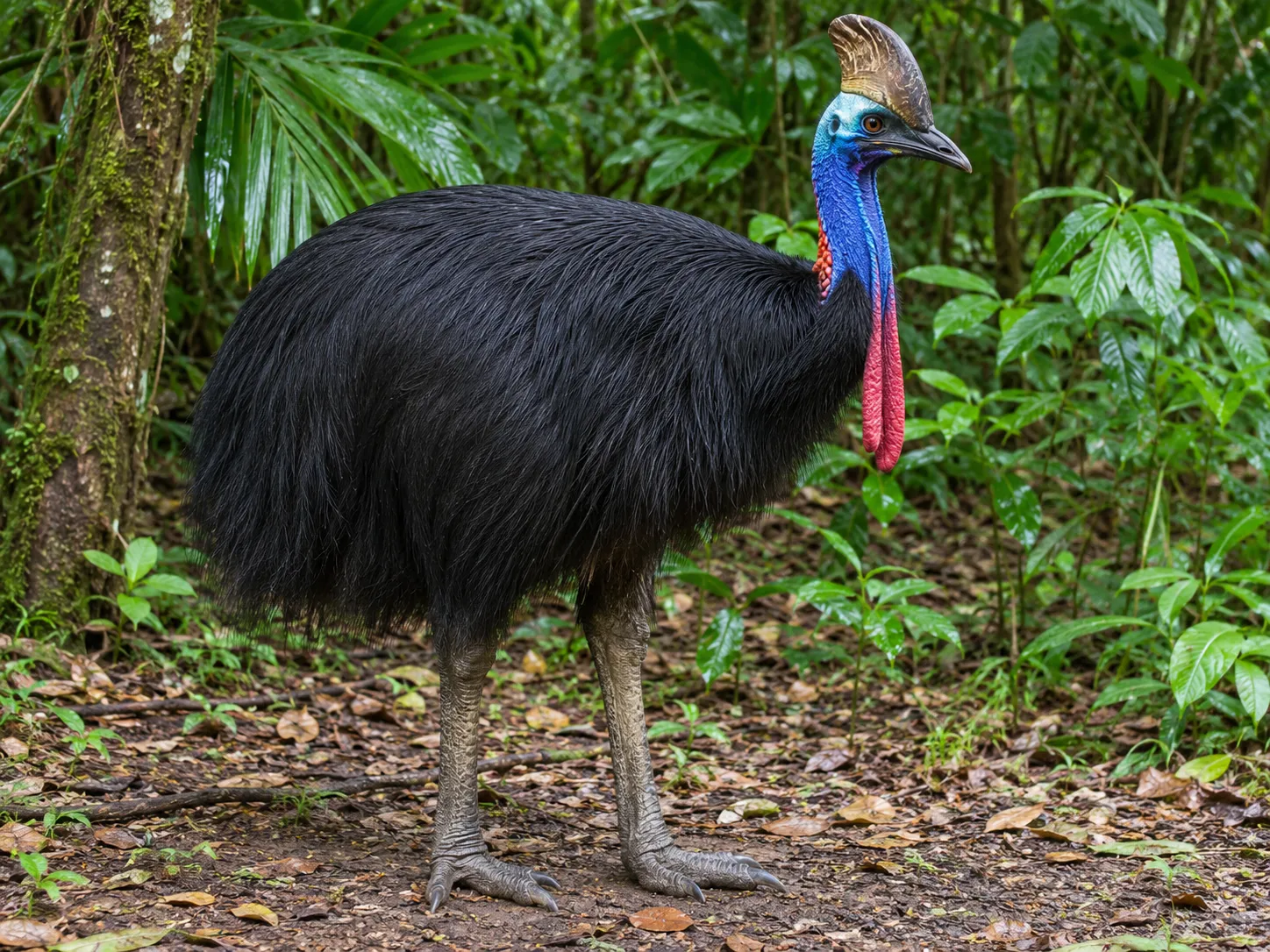
1. Southern Cassowary
Casuarius casuarius
A helmet-like casque and a rainforest seed disperser
A large, flightless rainforest bird with a casque on its head. It eats plenty of fallen fruit, then helps spread seeds through tropical forests. Its strange appearance goes hand in hand with a valuable role in the rainforest.
Why it's interesting: As a fruit eater, the cassowary helps rainforest plants spread their seeds. The casque is unmistakable, although scientists are still studying what it does.
How it compares: Unlike the ostrich, which lives mainly in open country, the cassowary moves through dense tropical forest.
Where it lives: Tropical rainforests of northeast Australia and New Guinea
What it eats: Mostly fallen fruit, along with fungi and small animals
What to notice: Look for the casque above its head and the bright blue neck.
Why does the cassowary matter to the rainforest?
As it eats fruit and moves through the forest, it spreads seeds from plants, helping the forest regenerate.
Learn more: BirdLife Australia
Unusual beaks
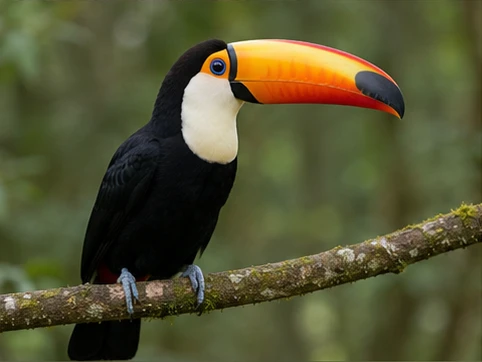
2. Toco Toucan
Ramphastos toco
An enormous bill that is lighter than it looks
The toco toucan's oversized bill is unmistakable. Although it appears heavy, it has a lightweight structure. The bill helps it reach food and also plays a part in regulating body heat.
Why it's interesting: A spectacular bill can be useful as well as colorful: the toucan can reach fruit while perched and regulate heat through blood flow in the bill. Size alone does not make a bill heavy.
How it compares: Compare it with the great hornbill: both have prominent bills, but the hornbill also has a raised casque.
Where it lives: Tropical forests, savanna woodland, and forest edges
What it eats: Fruit, insects, and small animals
What to notice: Notice the large bill compared with the size of its head.
Is a toucan's huge bill heavy?
It looks heavy, but it is built to be surprisingly light.
Learn more: Bird species information
Unusual beaks
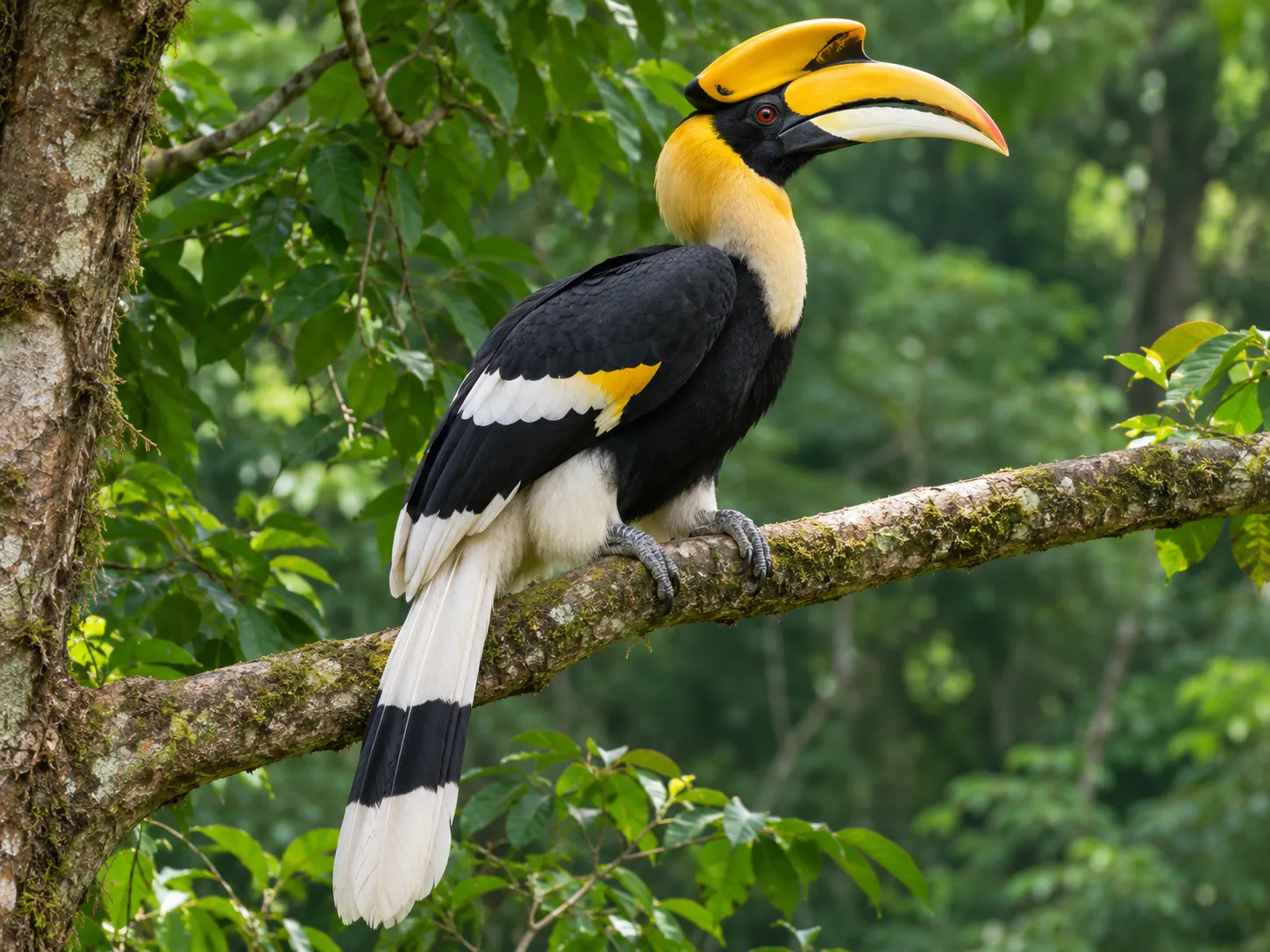
3. Great Hornbill
Buceros bicornis
A striking casque and an extraordinary nesting routine
The great hornbill has an enormous bill topped by a casque. Its nesting behavior is just as remarkable: the female stays sealed inside a tree cavity while the male delivers food through a small opening.
Why it's interesting: The most surprising feature may be its family life rather than its bill. Sealing the nest entrance creates a very different nesting situation from that of an open-nesting bird; the male must keep delivering food to the female.
How it compares: Like the toucan, it has a conspicuous bill, but the two species belong to different bird families and have different nesting habits.
Where it lives: Mature tropical and subtropical forests of South and Southeast Asia
What it eats: Mostly figs and other fruits, plus insects and small animals
What to notice: Look at the curved bill and the raised casque above it.
Why does a female hornbill stay in a tree cavity?
During nesting, she remains inside a sheltered cavity and receives food through a narrow opening.
Learn more: Chester Zoo
Unusual parenting
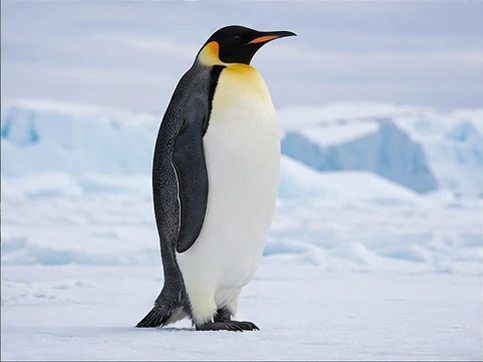
4. Emperor Penguin
Aptenodytes forsteri
A flightless Antarctic bird that breeds through winter
Emperor penguins are adapted to Antarctic sea ice and the nearby ocean. The male keeps an egg on his feet during the harsh winter. On land they appear awkward, but in water they are powerful swimmers.
Why it's interesting: A flightless body is not a disadvantage in every habitat. In penguins, wings are modified into flippers for underwater swimming, while the egg-on-feet strategy is associated with winter breeding on Antarctic ice.
How it compares: Compare it with the ostrich: both cannot fly, yet one swims through icy water and the other runs across open land.
Where it lives: Antarctic sea ice and nearby Southern Ocean waters
What it eats: Fish, squid, and krill
What to notice: Notice the upright stance and flipper-like wings.
Do male emperor penguins incubate eggs?
Yes. The male balances a single egg on his feet and keeps it warm during winter.
Learn more: Australian Antarctic Program
Colorful plumage
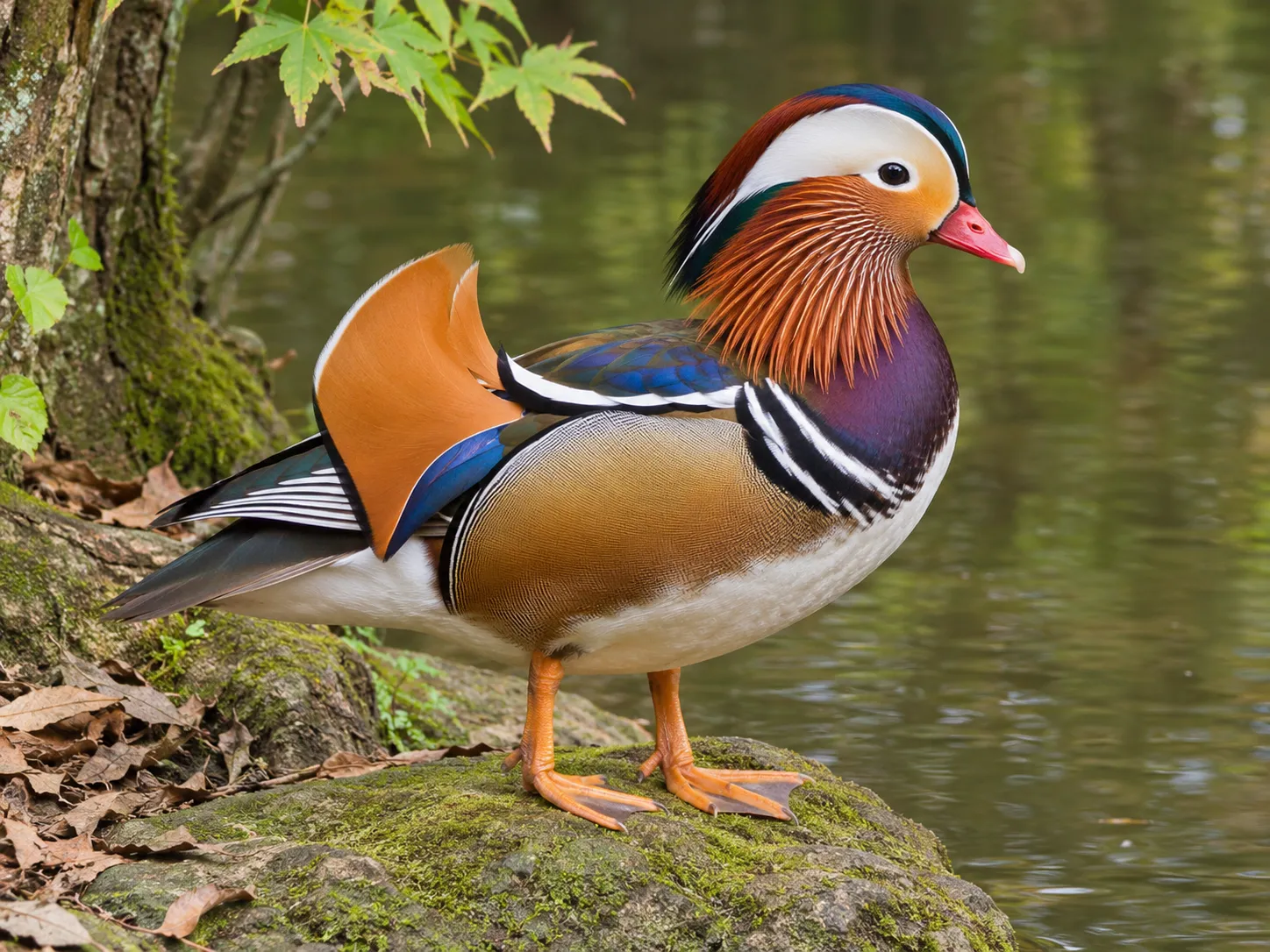
5. Mandarin Duck
Aix galericulata
Bright feather sails and tree-cavity nests
Male mandarin ducks are famous for their elaborate orange feather sails. Unlike many familiar pond ducks, this species often nests in tree cavities, and the ducklings jump down from the nest after hatching.
Why it's interesting: Its decorative feathers attract attention, but the nest site is equally memorable. Its tree-cavity nests show that even a water bird may raise its young well away from the water.
How it compares: Unlike the emperor penguin, this duck flies and commonly nests above ground in cavities.
Where it lives: Wooded lakes, ponds, and rivers in East Asia
What it eats: Seeds, aquatic plants, acorns, and small invertebrates
What to notice: Look for the raised orange feathers on a breeding male.
Do mandarin ducks nest in trees?
They often use tree cavities for nests, despite being water birds.
Learn more: RSPB
Unusual sounds
6. Laughing Kookaburra
Dacelo novaeguineae
A kingfisher with a laugh-like family chorus
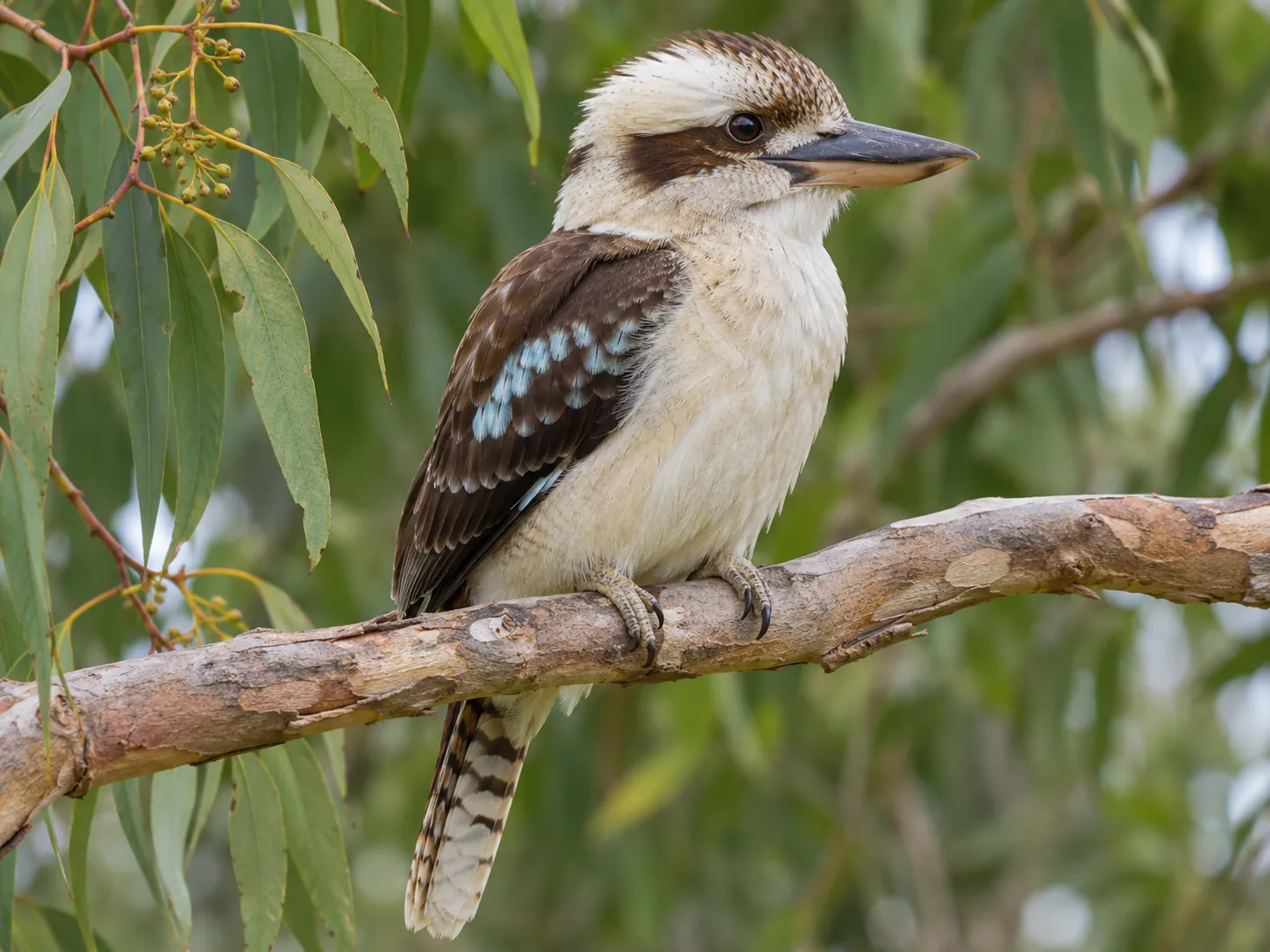
The laughing kookaburra is a sturdy Australian kingfisher whose calls sound remarkably like human laughter. Groups often call together, so a quiet woodland can suddenly fill with a chorus of cackling voices.
Why it's interesting: The kookaburra's calls are as distinctive as its appearance. Family groups often call together in a chorus heard across the woodland.
How it compares: The toucan is memorable for its bill, while the kookaburra is easier to recognize by its sound.
Where it lives: Eucalypt woodlands, open forests, parks, and suburban gardens
What it eats: Large insects, lizards, small snakes, and other small animals
What to notice: Listen for the rising, laughing series of calls.
Why does a kookaburra sound as if it is laughing?
Its distinctive territorial and social calls resemble laughter to human listeners.
Learn more: BirdLife Australia
Flightless specialists
7. Common Ostrich
Struthio camelus
The largest living bird, built to run rather than fly
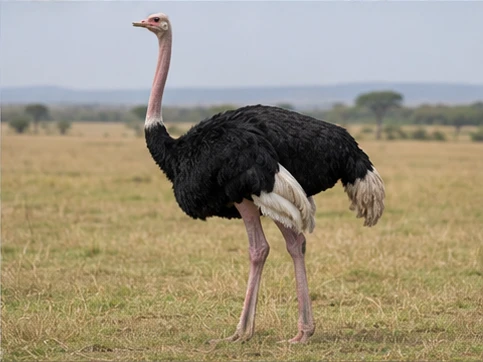
The common ostrich is the largest living bird. It cannot fly, but its long legs make it an impressive runner across open savannas and semi-deserts. Strong kicks also help it defend itself.
Why it's interesting: Losing the ability to fly has not stopped this bird from moving efficiently through open habitat. Long, powerful legs are valuable for fast travel and defense in places where running is practical.
How it compares: Unlike the emperor penguin, the ostrich uses strong legs rather than swimming flippers as its primary way to move.
Where it lives: Open savannas, semi-deserts, and dry grasslands
What it eats: Plants, seeds, and occasional insects
What to notice: Notice the extremely long legs and small wings relative to its body.
Can ostriches fly?
No. They are flightless birds adapted for fast running on the ground.
Learn more: San Diego Zoo Wildlife Alliance
Colorful plumage
8. Superb Fairywren
Malurus cyaneus
A tiny bird with dazzling blue breeding plumage and helpers
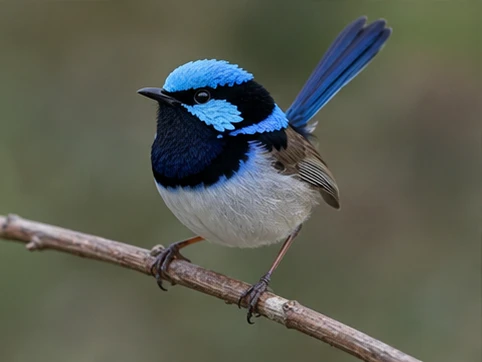
The superb fairywren is small, but breeding males can be startlingly blue. Even more interesting, these birds often live in cooperative family groups in which other members help raise young.
Why it's interesting: Color is only one part of the story. The striking blue plumage belongs to breeding males, so not every individual looks the same. Cooperative family groups can also help feed and protect young.
How it compares: Compare it with the mandarin duck: in both birds, the most conspicuous colors are associated with males.
Where it lives: Scrub, woodland edges, parks, and gardens in southeastern Australia
What it eats: Insects and other small invertebrates
What to notice: Look for blue patches on a breeding male and watch small groups moving together.
Do fairywrens help raise each other's young?
They often live in cooperative groups where helpers assist with raising chicks.
Learn more: Bird species information
Unusual flight
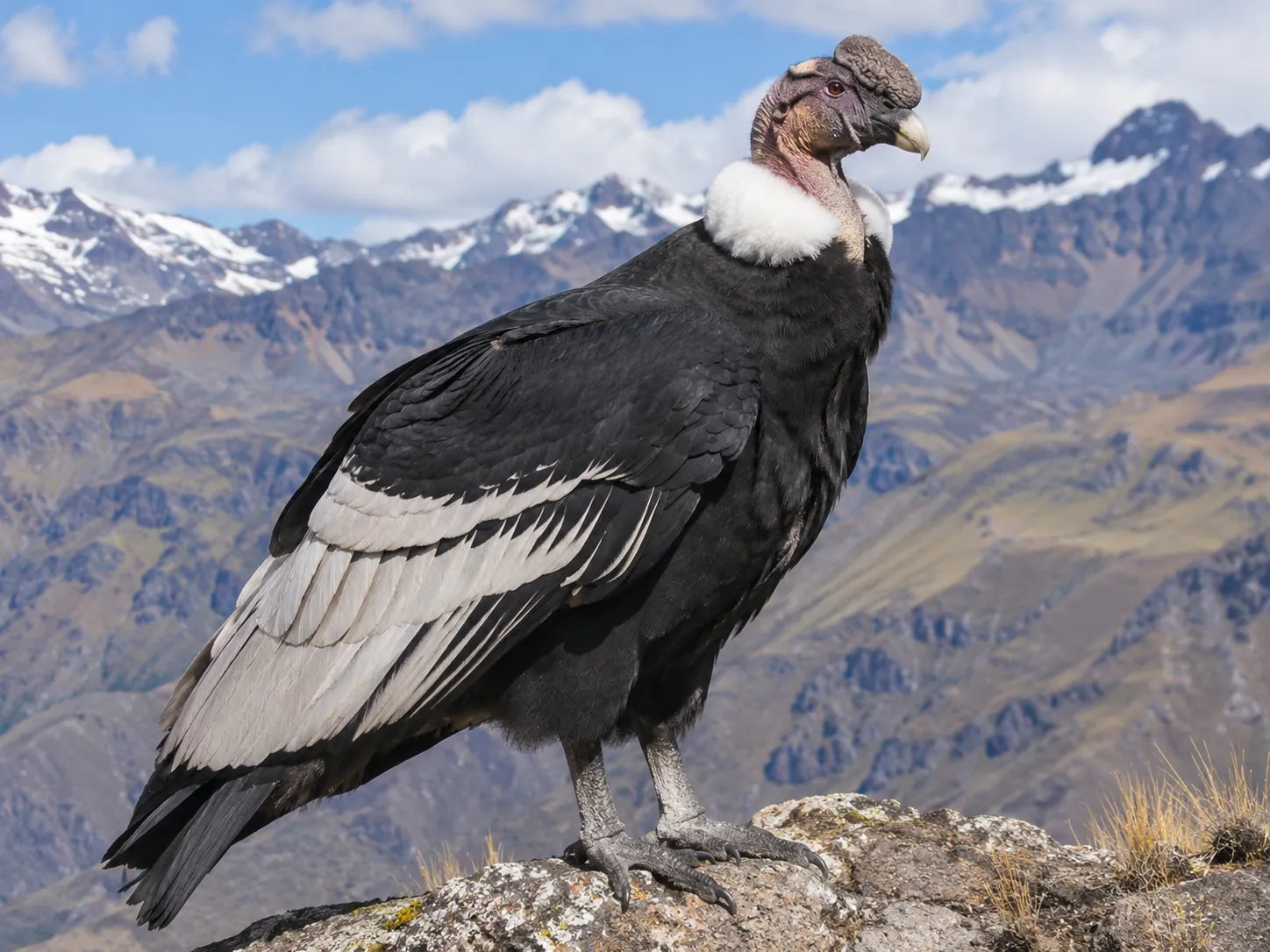
9. Andean Condor
Vultur gryphus
A giant soaring scavenger that rides mountain air
The Andean condor moves over high mountain country on broad wings. By using rising air currents, it can glide for long distances with very little flapping. Its diet of carrion helps remove dead animals from the landscape.
Why it's interesting: A huge bird does not need to beat its wings continuously. Rising air lets the condor travel over mountainous terrain while conserving effort; soaring supports a lifestyle of searching widely for carrion.
How it compares: Unlike the ostrich and emperor penguin, the condor is an accomplished flying bird, using air currents to stay aloft.
Where it lives: High Andean mountains, rocky cliffs, and open uplands
What it eats: Carrion from large mammals
What to notice: Notice the huge, broad wings when the bird is soaring.
How do Andean condors travel so far without flapping much?
They take advantage of rising air currents to remain airborne.
Learn more: San Diego Zoo Wildlife Alliance
Colorful plumage
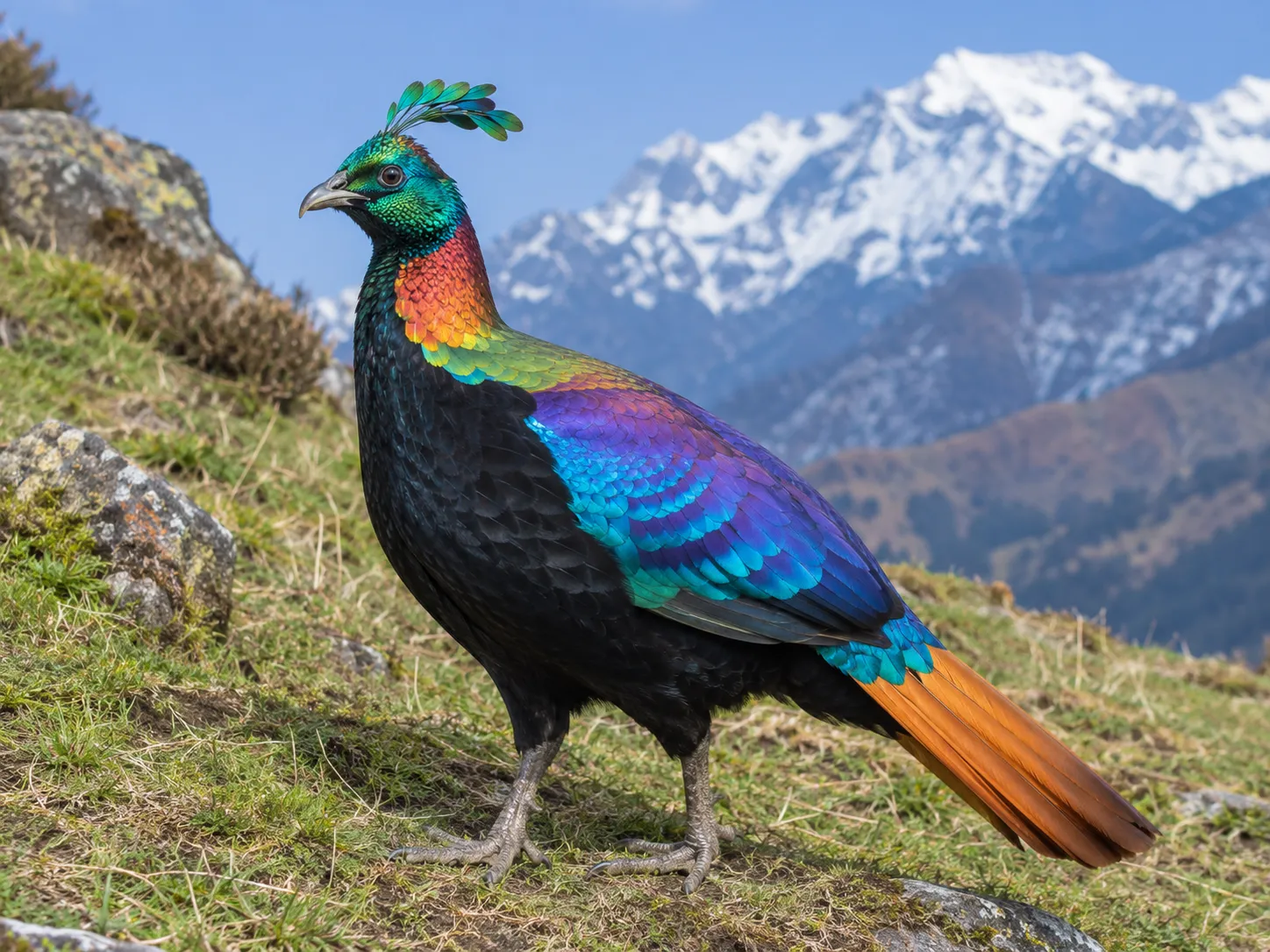
10. Himalayan Monal
Lophophorus impejanus
A vividly colored mountain pheasant that digs for food
The Himalayan monal lives around mountain forests, scrub and meadows. Its spectacular plumage stands out against the rocky landscape, but it spends much of its time searching the ground for roots, bulbs and insects.
Why it's interesting: The monal's colorful feathers grab attention, but it spends much of its day searching mountain soil for roots, tubers and insects.
How it compares: The superb fairywren is a tiny Australian songbird; the monal is a larger mountain pheasant with very different food-searching habits.
Where it lives: Himalayan mountain forests, alpine scrub, and meadows
What it eats: Roots, tubers, shoots, seeds, and insects
What to notice: Look for iridescent colors and watch for birds scratching or digging in the ground.
What does a Himalayan monal eat?
It searches for roots, tubers, shoots, seeds and insects.
Learn more: Chimei Museum
Why Do Some Birds Look So Strange?
What looks bizarre to a person often has a practical role in the bird's world. Some traits help birds find food, control body temperature, attract partners, raise chicks or move through their habitat. Looking at how a feature is used tells us more than simply calling it weird.
Oversized beaks and head shapes
The toco toucan uses its large, lightweight bill for feeding and heat regulation. The great hornbill has an equally memorable bill and casque, while the southern cassowary has a helmet-like casque.
Color and display
Breeding male superb fairywrens are vividly blue. Mandarin ducks have orange feather sails, and Himalayan monals show iridescent plumage. Appearance can change with sex or breeding season.
Unexpected parenting
Male emperor penguins incubate eggs during Antarctic winter. Mandarin ducklings leap down from tree-cavity nests. These are very different ways of protecting the next generation.
Unusual movement and sounds
Ostriches are flightless runners, Andean condors can soar long distances on rising air, and laughing kookaburras produce a family chorus that sounds like laughter.
Strange Bird Features and What They Do
Two birds can look unusual for completely different reasons. Compare some of their most distinctive features and discover how those features help them live. Scientists are still studying the purposes of some structures.
| Unusual trait | Bird examples | Why it matters |
|---|---|---|
| Enormous bill | Toco Toucan | The lightweight bill helps with feeding and heat regulation. |
| Sealed tree-cavity nest | Great Hornbill | The female stays in the cavity and relies on food delivered through a narrow opening. |
| Flightless body | Emperor Penguin and Common Ostrich | Penguins use flippers to swim; ostriches use long legs to run. |
| Bright breeding plumage | Superb Fairywren and Mandarin Duck | The most conspicuous colors and feathers are especially noticeable in breeding males. |
| Laughter-like calls | Laughing Kookaburra | Group calling is a recognizable part of this bird's social behavior. |
| Soaring wings | Andean Condor | Rising air helps it cover long distances with little flapping. |
Scientists are still investigating the role of the cassowary's helmet-like casque. Its appearance is unmistakable, but its exact function is not yet settled.
Which Strange Birds Cannot Fly?
The southern cassowary, common ostrich and emperor penguin cannot fly. Their bodies work in different ways: cassowaries move through dense forests, ostriches run across open grasslands, and emperor penguins use their wings as flippers for swimming. Being flightless does not mean these birds are slow or helpless.
How to Recognize These Unusual Birds
Start with the feature you can actually observe. A huge orange-yellow bill suggests a toco toucan, while a curved bill topped with a casque points toward a hornbill. A large flightless bird with a bright blue neck is very different from an ostrich's long-legged shape. Not every clue is visual: a laughing kookaburra is often easier to notice by its characteristic calls.
Colors can change with sex, age or breeding season. A brilliant blue male superb fairywren does not mean every fairywren looks that way, and a richly colored male mandarin duck differs from a female. Use the bird's shape, habitat and behavior alongside its colors rather than relying on one photograph.
Questions About Strange Birds
What are some of the weirdest birds in the world?
Southern cassowaries, toco toucans, great hornbills, emperor penguins and laughing kookaburras are memorable examples. Their unusual traits include head shapes, bills, breeding behavior and distinctive calls.
Are these strange birds real?
Yes. Cassowaries, toucans, hornbills and all the other birds pictured here are real species. Their unusual looks and behaviors are part of how they live.
Why do some birds have such strange beaks?
A bird's bill can help it reach food, shed heat or handle other daily tasks. The toco toucan's large bill is one example; the great hornbill also has a striking casque above its bill.
Which unusual birds cannot fly?
The southern cassowary, common ostrich and emperor penguin are flightless. Cassowaries and ostriches move mainly on foot, while emperor penguins are excellent swimmers.
What is the weirdest-looking bird?
It depends on what surprises you most. The southern cassowary has a helmet-like casque and blue neck, while the toco toucan is famous for its oversized bill.
Where can I discover more unusual birds?
Try the free Random Bird Generator to explore birds by type, region and habitat, with photographs and facts where available.
Discover Another Unusual Bird
Want to keep exploring? The free Random Bird Generator lets you discover birds by type, region or habitat, with photos and facts where available.
Try the Random Bird GeneratorYou can also explore animal names A–Z or read more animal facts.