
Marine wildlife · Venom, bites & real risk
10 of the Deadliest Sea Creatures in the World
The Australian box jellyfish, stonefish, saltwater crocodile and several large sharks are among the ocean and coastal animals capable of seriously injuring people. Meet 10 remarkable species, find out how they hunt or defend themselves, and see when an encounter with one could be dangerous.
Updated November 20, 2026 · Species guides and safety sources
Each animal is dangerous in a different way. There isn't a reliable worldwide count that lets us rank all of them by deaths caused.
What Are the Deadliest Sea Creatures?
Australian box jellyfish can deliver exceptionally potent venom, stonefish inject venom through dorsal spines, sea snakes can bite defensively, and saltwater crocodiles or large sharks can inflict serious wounds with their jaws. These dangers are different: venom strength, the severity of a possible injury and the chance of encountering the animal all matter. There is no single answer to which one is most dangerous to people.
10 Dangerous Sea Creatures at a Glance
Choose a sea creature to see its picture, where it lives and how an encounter could be dangerous.
| Sea creature | Potential harm | Typical encounter |
|---|---|---|
| 1. Australian Box Jellyfish | Venomous tentacle sting | Contact with tentacles in tropical coastal water |
| 2. Stonefish | Venomous dorsal spine puncture | Accidentally stepping on or handling a camouflaged fish |
| 3. Saltwater Crocodile | Powerful predatory bite | Entering crocodile habitat near rivers, estuaries or coasts |
| 4. Great White Shark | Large predatory bite | Rare interactions with people in coastal and offshore waters |
| 5. Bull Shark | Large predatory bite | Coastal, estuary and sometimes freshwater environments |
| 6. Tiger Shark | Large predatory bite | Encounters in tropical and warm-temperate seas |
| 7. Yellow-bellied Sea Snake | Venomous bite | Rare close contact or handling in warm ocean waters |
| 8. Red Lionfish | Venomous fin-spine puncture | Handling fish or accidentally contacting sharp spines |
| 9. Portuguese Man o' War | Stinging tentacles | Touching drifting tentacles in water or on shore |
| 10. Common Stingray | Defensive tail-spine puncture | Accidentally stepping near or disturbing a buried ray |
10 Deadly Sea Creatures You Should Know
Venomous tentacle sting
1. Australian Box Jellyfish
Chironex fleckeri
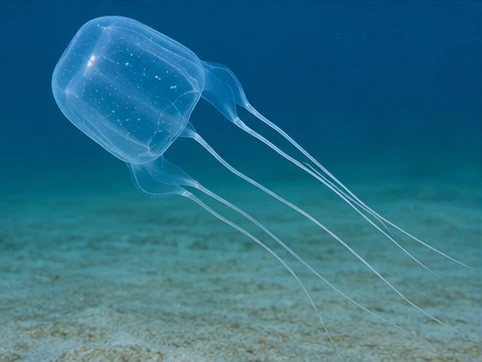
This almost transparent jellyfish has tentacles armed with stinging cells. Chironex fleckeri is especially significant because severe stings can affect the heart and lead to rapid medical emergencies. Its venom is used to capture prey, not to hunt people.
How it lives: Its transparent bell and trailing tentacles help it move through shallow coastal water while stinging cells immobilize small fish and shrimp. Contact with people is incidental, but the venom makes prevention especially important.
Where it lives: Shallow tropical coasts and estuaries
How people might encounter it: Contact with tentacles in tropical coastal water
What is the real risk?
Potent venom can make some stings life-threatening; not every box jellyfish species has the same danger.
How it compares: Unlike a stonefish, a box jellyfish stings with tentacles rather than dorsal spines.
Learn more: NOAA Ocean Service — Most venomous marine animal
Venomous dorsal spine puncture
2. Stonefish
Synanceia verrucosa
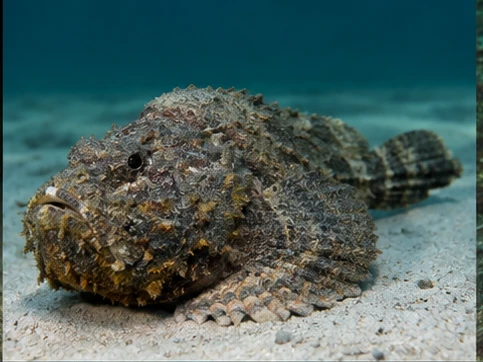
Stonefish blend into reef rubble and sand, making them difficult to see. Their dorsal spines can inject venom when pressure is applied. Their camouflage is useful for survival, but it also explains why an unnoticed encounter is possible.
How it lives: Remaining nearly motionless among stones is useful to an ambush predator. For beachgoers the same camouflage makes an accidental foot or hand contact more plausible than a chase or attack.
Where it lives: Reef rubble and sandy bottoms
How people might encounter it: Accidentally stepping on or handling a camouflaged fish
What is the real risk?
A spine injury can cause intense pain and needs prompt professional assessment; it is not a deliberate human attack.
How it compares: The red lionfish also has venomous spines, while the stonefish is particularly known for staying hidden on the bottom.
Powerful predatory bite
3. Saltwater Crocodile
Crocodylus porosus
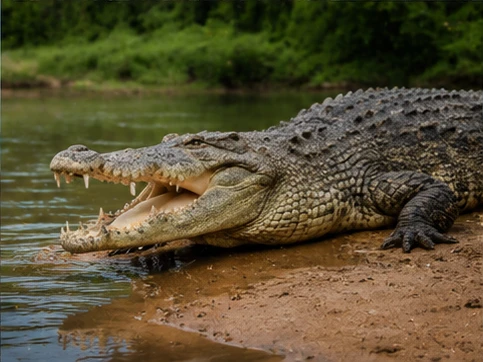
The saltwater or estuarine crocodile lives in coastal waters as well as rivers and mangroves. Its jaws and size make it a formidable predator. It belongs in a discussion of dangerous coastal wildlife, even though it is a reptile rather than a fish.
How it lives: This reptile uses rivers, estuaries and coastal habitats, so the name does not mean it lives only in the open sea. Its ability to move between these environments explains why warnings apply well inland as well as near beaches.
Where it lives: Estuaries, mangroves, rivers, and coastal seas
How people might encounter it: Entering crocodile habitat near rivers, estuaries or coasts
What is the real risk?
An attack by a large crocodile can cause catastrophic injury; local warnings deserve serious attention.
How it compares: Unlike venomous jellyfish and fish, crocodiles cause harm through physical attack, not venom.
Large predatory bite
4. Great White Shark
Carcharodon carcharias
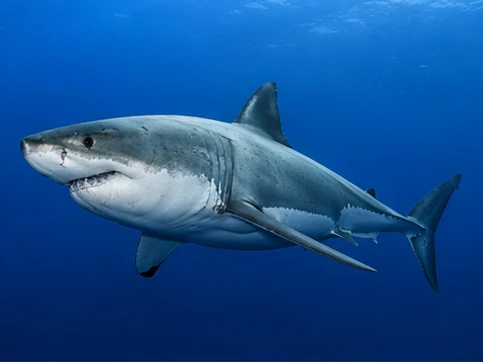
Great white sharks are large marine predators adapted to hunting fish and marine mammals. When a serious human bite occurs, the injuries may be severe. Most people will never encounter one, and documented incidents give a clearer picture of the danger than movie scenes.
How it lives: Great whites occupy temperate coastal and offshore seas. Their ability to retain heat in parts of the body supports hunting in relatively cool water; this biological adaptation is different from the question of how often they encounter humans.
Where it lives: Coastal and offshore temperate waters
How people might encounter it: Rare interactions with people in coastal and offshore waters
What is the real risk?
Bites can be severe or fatal, but encounters between great white sharks and swimmers are uncommon.
How it compares: Unlike the bull shark, the great white is primarily associated with coastal and offshore saltwater environments.
Learn more: Florida Museum — International Shark Attack File
Large predatory bite
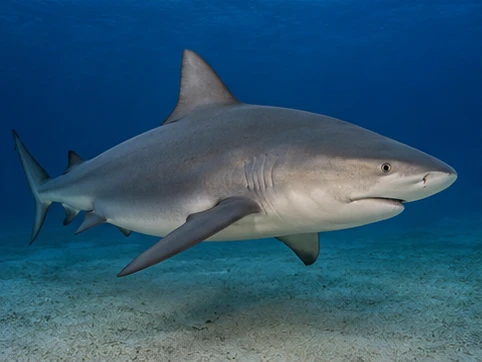
5. Bull Shark
Carcharhinus leucas
Bull sharks can tolerate a wide range of salinities and travel into estuaries and some freshwater rivers. This makes their habitat different from that of many strictly marine sharks. Serious bites are possible, especially where people share waters with these sharks.
How it lives: Salt-regulating organs allow bull sharks to enter some freshwater habitats as well as estuaries and coasts. Its ability to enter rivers sets the bull shark apart from many sharks that stay in salt water.
Where it lives: Coasts, estuaries, rivers, and freshwater lakes
How people might encounter it: Coastal, estuary and sometimes freshwater environments
What is the real risk?
Potential for serious bites; its ability to enter rivers changes where encounters are possible.
How it compares: Great whites are usually discussed in marine waters, whereas bull sharks can also move far into freshwater.
Learn more: Florida Museum — International Shark Attack File
Large predatory bite
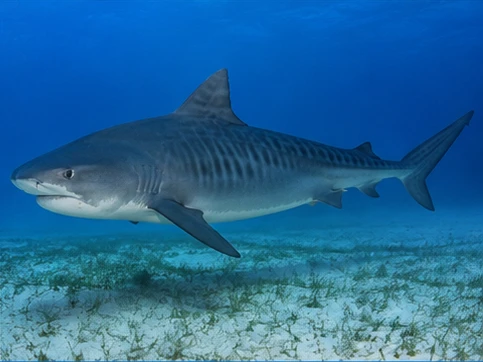
6. Tiger Shark
Galeocerdo cuvier
Tiger sharks are opportunistic predators with a varied diet that can include fish, turtles and carrion. Juveniles have striking dark bars that become less noticeable with age. Human risk depends on local encounters, not just on the animal's size.
How it lives: A varied diet helps this large predator exploit different food sources. Younger tiger sharks have dark bars that fade as they mature.
Where it lives: Coastal, reef, and open-ocean waters
How people might encounter it: Encounters in tropical and warm-temperate seas
What is the real risk?
Large size and powerful jaws make serious injuries possible; attacks on humans are still uncommon.
How it compares: All three sharks here can cause severe bites, but they live in different habitats and hunt different prey.
Learn more: Florida Museum — International Shark Attack File
Venomous bite
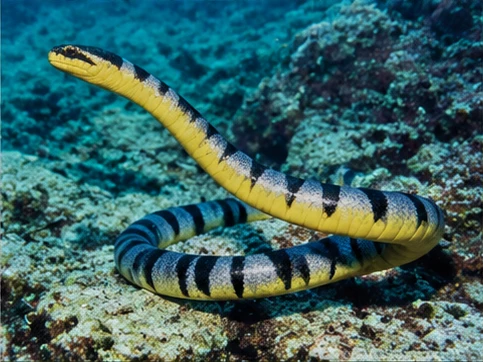
7. Yellow-bellied Sea Snake
Hydrophis platurus
The yellow-bellied sea snake is adapted to open-ocean life, with a paddle-shaped tail that helps it swim. Its venom is medically important, but it does not normally seek people out. Suspected bites require immediate medical attention even if early symptoms seem mild.
How it lives: Its laterally compressed body and paddle-shaped tail are suited to life at the ocean surface. It is a marine reptile, not a fish, and its need to breathe air makes its physiology distinct from a venomous reef fish.
Where it lives: Warm open-ocean surface waters
How people might encounter it: Rare close contact or handling in warm ocean waters
What is the real risk?
Severe envenomation can be life-threatening, although bites involving people are unusual.
How it compares: A sea snake delivers venom through a bite; a jellyfish uses stinging cells, while a stonefish uses spines.
Venomous fin-spine puncture
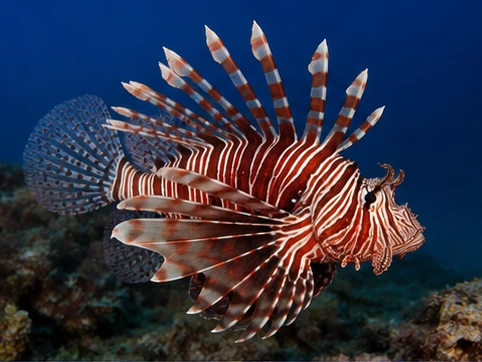
8. Red Lionfish
Pterois volitans
The red lionfish has long, conspicuous fin spines that contain venom. Those spines are a defense against predators, not a hunting weapon used on people. The species also has an invasive range in parts of the western Atlantic.
How it lives: The long spines are mainly defensive, while lionfish catch smaller fish using precise movement and their large pectoral fins. In its introduced western Atlantic range, its ecological impact is a separate concern from human sting risk.
Where it lives: Reefs, rocky areas, and mangroves
How people might encounter it: Handling fish or accidentally contacting sharp spines
What is the real risk?
Spines may cause severe pain and other symptoms; fatal outcomes are uncommon.
How it compares: Like stonefish, lionfish have venomous spines, but their vivid striped appearance contrasts with stonefish camouflage.
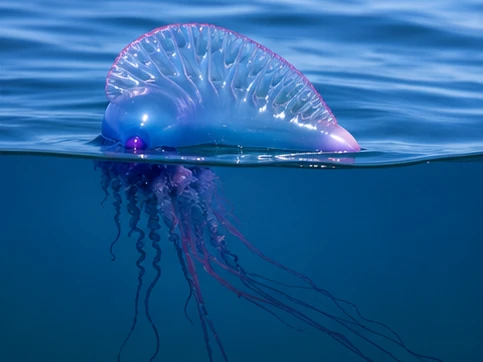
Stinging tentacles
9. Portuguese Man o' War
Physalia physalis
The Portuguese man o' war is a siphonophore: a colony of specialized organisms working together. Its floating structure travels with winds and currents, while tentacles catch small prey. Tentacles can still sting after the animal washes ashore.
How it lives: Its floating bladder stays at the sea surface while currents and wind carry the colony. The tentacles capture prey below the float. Being stranded on a beach does not automatically make the tentacles safe to touch.
Where it lives: Warm open ocean and wind-driven surface waters
How people might encounter it: Touching drifting tentacles in water or on shore
What is the real risk?
Stings can be intensely painful and sometimes serious; it is not a true jellyfish.
How it compares: It resembles a jellyfish at first glance, but is a colonial siphonophore; the Australian box jellyfish is a true box jellyfish.
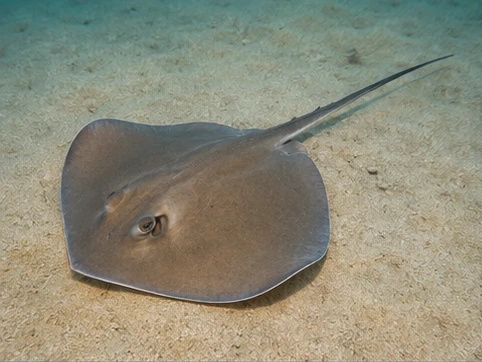
Defensive tail-spine puncture
10. Common Stingray
Dasyatis pastinaca
The common stingray often rests partly buried in sand or mud, leaving only the eyes and breathing openings visible. A tail spine is used defensively when it feels threatened. Watching where you step and leaving rays alone lowers the chance of a painful encounter.
How it lives: A flat body lets this ray rest on a sandy or muddy bottom, often partly covered by sediment. The tail spine is a defensive structure; most encounters involve disturbing an animal rather than a ray hunting people.
Where it lives: Sandy and muddy coastal bottoms
How people might encounter it: Accidentally stepping near or disturbing a buried ray
What is the real risk?
Deep puncture wounds may be medically serious; stingrays do not normally pursue swimmers.
How it compares: Stingray injuries involve a tail spine, whereas stonefish use venomous dorsal spines.
Learn more: Healthdirect Australia — Sea creature bites and stings
Most Venomous vs Most Dangerous: Why They Aren't the Same
An animal may carry highly potent venom yet rarely bite or sting people. Another animal may lack venom but cause devastating injury through its size and teeth. The risk to a person also depends on whether the species lives near swimmers or fishers, the circumstances of contact, and how quickly appropriate medical help is available.
Venom potency
How strongly a toxin affects the body. Australian box jellyfish have exceptionally potent venom, but this alone is not an annual death count.
Possible injury severity
How serious a bite, puncture or sting could be. A saltwater crocodile's bite can be catastrophic without any venom.
Human exposure
How often a person may meet the animal. A hidden stonefish in shallow reef rubble presents a different contact scenario from a shark offshore.
Verified incident records
Recorded bites and fatalities depend on where and how events are reported. Different animal groups cannot always be compared reliably.
How Can Sea Creatures Hurt Humans?
A jellyfish sting, a fish spine and a crocodile bite are very different hazards. Here's how each can happen.
| Mechanism | Example | What happens |
|---|---|---|
| Tentacle sting | Australian Box Jellyfish | Stinging cells inject venom on contact |
| Hidden dorsal spines | Stonefish | Pressure on concealed spines can deliver venom |
| Bite by large predator | Saltwater Crocodile / Great White Shark | Serious physical injury rather than venom |
| Venomous bite | Yellow-bellied Sea Snake | Severe envenomation is possible; human bites are uncommon |
| Defensive fin spines | Red Lionfish | Contact can cause painful punctures |
| Tail spine | Common Stingray | A startled ray may defend itself with a sharp tail spine |
Box Jellyfish vs Stonefish vs Sea Snake
These animals can all deliver venom, but the delivery methods are very different. The box jellyfish uses microscopic stinging structures on its tentacles. The stonefish injects venom when pressure drives a dorsal spine into skin. A sea snake uses a bite. Knowing how venom enters the body matters because these injuries need different medical care.
Medical first aid depends on the animal and the location of the injury. For evidence-based guidance, consult the ANZCOR marine envenomation guideline and local emergency services.
How Dangerous Are Sharks Really?
The Florida Museum of Natural History's International Shark Attack File recorded 65 confirmed unprovoked shark bites worldwide in 2025, including nine fatalities. These figures count a particular type of incident worldwide, not every shark encounter. Serious bites do happen, but confirmed reports give a clearer picture than dramatic headlines.
Great white, tiger and bull sharks feature in discussions of serious bite injuries. Records of jellyfish stings, sea snake bites and crocodile attacks are gathered differently, so their totals cannot be compared directly with these shark figures. Read the 2025 worldwide shark bite summary.
Great White vs Bull vs Tiger Shark
These three sharks are large predators, but their habitats and feeding habits are not the same. Compare where each lives and what makes it distinctive.
| Species | Typical environment | What stands out |
|---|---|---|
| Great White Shark | Coastal and offshore temperate waters | Coastal and offshore temperate waters; can retain body heat above surrounding seawater |
| Bull Shark | Coasts, estuaries, rivers, and freshwater lakes | Coastal waters, estuaries and some freshwater rivers; tolerates changes in salinity |
| Tiger Shark | Coastal, reef, and open-ocean waters | Coastal, reef and open-ocean waters; feeds on a wide range of prey |
Shark encounters vary by habitat and location. Worldwide bite totals cannot tell you which species you're most likely to meet at a particular beach.
Venomous, Poisonous or Dangerous Without Venom?
A venomous animal delivers toxins through a bite, sting or spine. A poisonous animal may cause harm when a toxin is swallowed or otherwise absorbed. These words describe how toxins reach the body, not how many people an animal injures. Sharks and crocodiles can cause severe wounds without using venom.
Venom delivered on contact
A box jellyfish uses stinging cells; a stonefish uses venomous spines; a sea snake uses a bite.
Poison is different
An animal can be poisonous if its toxins harm a predator that eats or touches it. That does not make every dangerous marine animal venomous.
Physical injuries
Shark bites, crocodile bites and some defensive spine wounds may be severe even when the danger is not primarily from injected toxins.
How to Stay Safer Around Dangerous Sea Animals
- Follow local beach closures, lifeguard instructions and warnings about jellyfish, crocodiles or sharks.
- Never touch unfamiliar sea creatures, including animals or tentacles stranded on shore.
- Be cautious around reef rubble and sandy seabeds where camouflaged fish or rays may rest.
- Do not enter known crocodile habitat, including rivers or coastal waters marked as unsafe.
- Seek emergency medical help for severe stings, bites, breathing symptoms or suspected venomous snake bites.
There is no single first-aid treatment for every marine sting or bite. Appropriate treatment differs by species and region. For advice from medical and first-aid providers, see Healthdirect Australia and the ANZCOR guideline.
Questions About Dangerous Sea Creatures
What is the deadliest sea creature in the world?
It depends on the kind of danger. Australian box jellyfish have extraordinarily potent venom, while large sharks and crocodiles can inflict devastating bites. The Australian box jellyfish has exceptionally dangerous venom, while sharks and saltwater crocodiles can cause severe bites. Actual risk also depends on exposure, geography and available medical care.
What is the most venomous animal in the ocean?
NOAA identifies the Australian box jellyfish (Chironex fleckeri) as a particularly venomous marine animal. Venom potency alone cannot tell us how often humans are injured.
Are sharks the deadliest ocean animals?
Not necessarily. The International Shark Attack File recorded 65 confirmed unprovoked shark bites worldwide in 2025, including nine fatalities. Other marine animal injuries are reported in different ways, making a direct comparison unreliable.
What is the most venomous fish?
Stonefish are among the most venomous fishes. Their concealed dorsal spines can deliver venom if the fish is stepped on or handled.
Can sea snakes kill humans?
Yes, severe sea snake envenomation can be fatal without appropriate treatment. Bites are uncommon; anyone who suspects a sea snake bite needs emergency medical assessment.
Is the Portuguese man o' war a jellyfish?
No. It is a siphonophore made up of specialized organisms working together. Its tentacles have stinging cells similar to those found in jellyfish.
What is the difference between venomous and poisonous?
Venom is delivered into another animal, such as through a sting, spine or bite. Poison typically harms through ingestion or contact. A large shark is dangerous because of its bite, not because it is venomous.
How can you avoid dangerous sea creatures?
Follow local beach warnings and lifeguard advice, avoid touching unfamiliar marine life, and stay away from crocodile habitats. Seek urgent medical help for severe bites or stings; first aid depends on the animal involved.
Discover More Ocean Animals
From the world's most unusual fish to familiar marine mammals, discover real ocean creatures with pictures, habitats and facts in the free Random Sea Animal Generator.
Try the Random Sea Animal GeneratorRead more unusual animal stories or browse the animal A–Z directory.